A lifestyle shot of a man wearing a dark denim shirt carrying a baby in a beige Stokke LimasFlex carrier featuring a cherry print, on a sunlit city street.

Newborn baby carrier: what to look for and when you can start

A calm, practical guide for parents on choosing a carrier for the first weeks, keeping your baby safe and getting comfortable with carrying.

Quick answer

Can you carry a newborn?

Yes. Many parents carry their baby from the first weeks, and a baby carrier newborn parents can rely on comes down to three things: it is designed for newborns, it holds your baby in a safe position, and you use it correctly.

Always follow the manufacturer's instructions and check the carrier's stated age and weight range before you start. This guide covers what to look for in a newborn baby carrier, a simple safety checklist and when you can begin.

Choosing well

What to look for in a newborn baby carrier

The best baby carrier for a newborn is one that supports a very small body without gaps or guesswork. Here is what to look for.

Head and neck support

A newborn cannot hold their head up yet, so the carrier should support the head and neck, ideally with a way to adjust the panel as your baby grows.

An ergonomic seated position

Look for a supported seat where your baby's knees sit higher than their bottom and their legs are supported, rather than dangling.

A snug fit, held high and close

Your baby should sit high on your chest, close enough to kiss, with no slack fabric pulling them away from you.

Adjustability for a small body

A newborn is tiny. Check that the panel, straps and waistband can all be tightened to fit a small baby and your own frame.

Soft, breathable fabric

Gentle, natural fabrics are kinder to delicate skin and help keep baby comfortable. A carrier adds warmth, so breathability matters.

Comfort for the wearer

Wide shoulder straps and a supportive waistband spread the weight evenly, so you can carry for longer without an aching back.
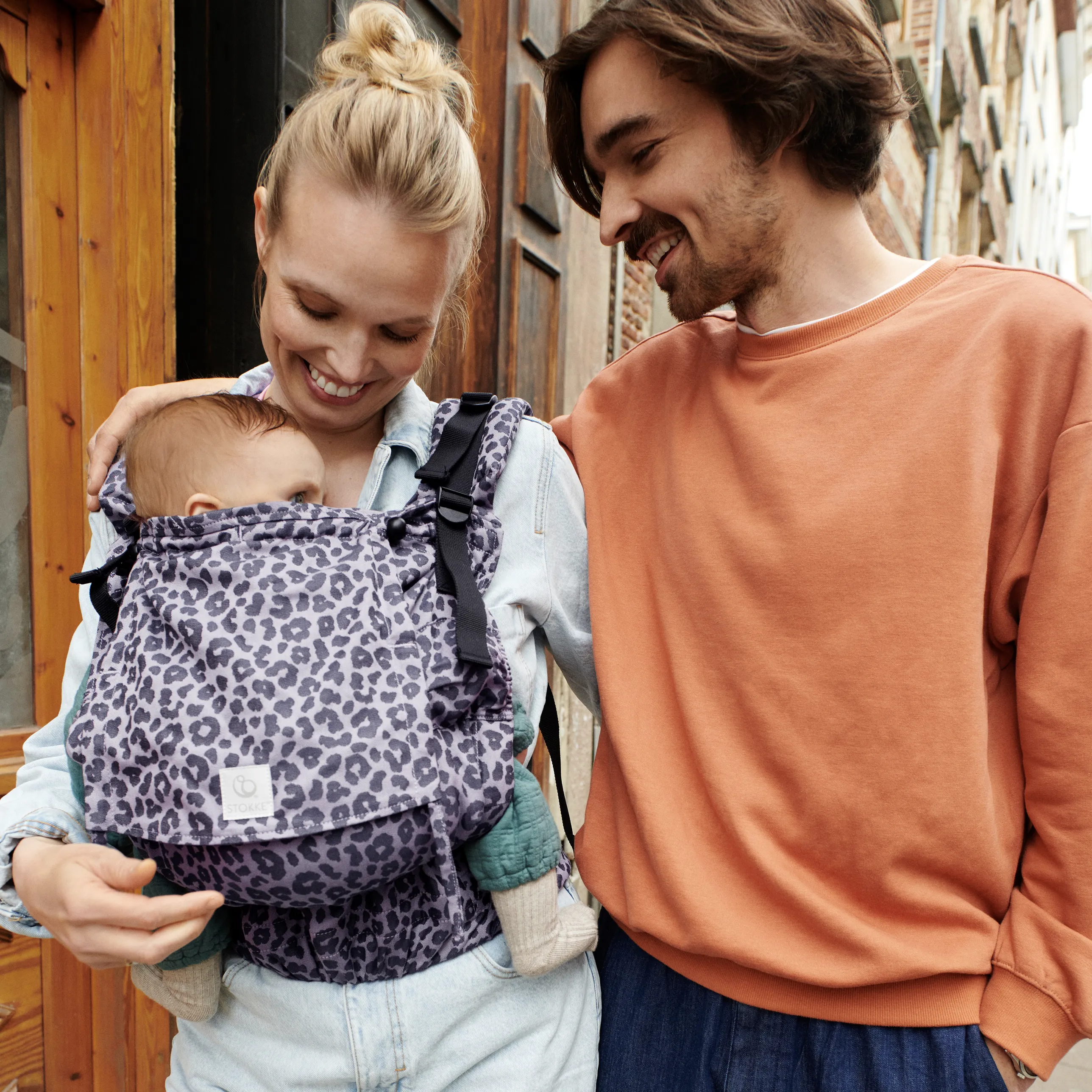
A lifestyle shot of a smiling woman wearing a leopard-print Stokke Limas Flex baby carrier with a baby inside, standing beside a smiling man in an orange sweatshirt on a sunny street by a wooden door.

Baby carrier safety

A safe babywearing checklist for newborns

Baby carrier safety is mostly about simple habits. This checklist follows the widely used T.I.C.K.S guidance, in plain words. Run through it every time you wear your baby.

Keep baby visible and close

You should always be able to see your baby's face by glancing down, with nothing covering it.

Keep the airway clear

Check that your baby's nose and mouth are free, and that fabric, a blanket or your own clothing is not covering them.

Chin off the chest

Leave at least a finger's width between your baby's chin and chest so breathing stays easy.

Support the back

Your baby's back should be held in its natural, gently curved position, with the carrier snug enough to support it.

No loose fabric over the face

Tuck in any spare fabric and hoods so nothing drapes across your baby's face while you move.
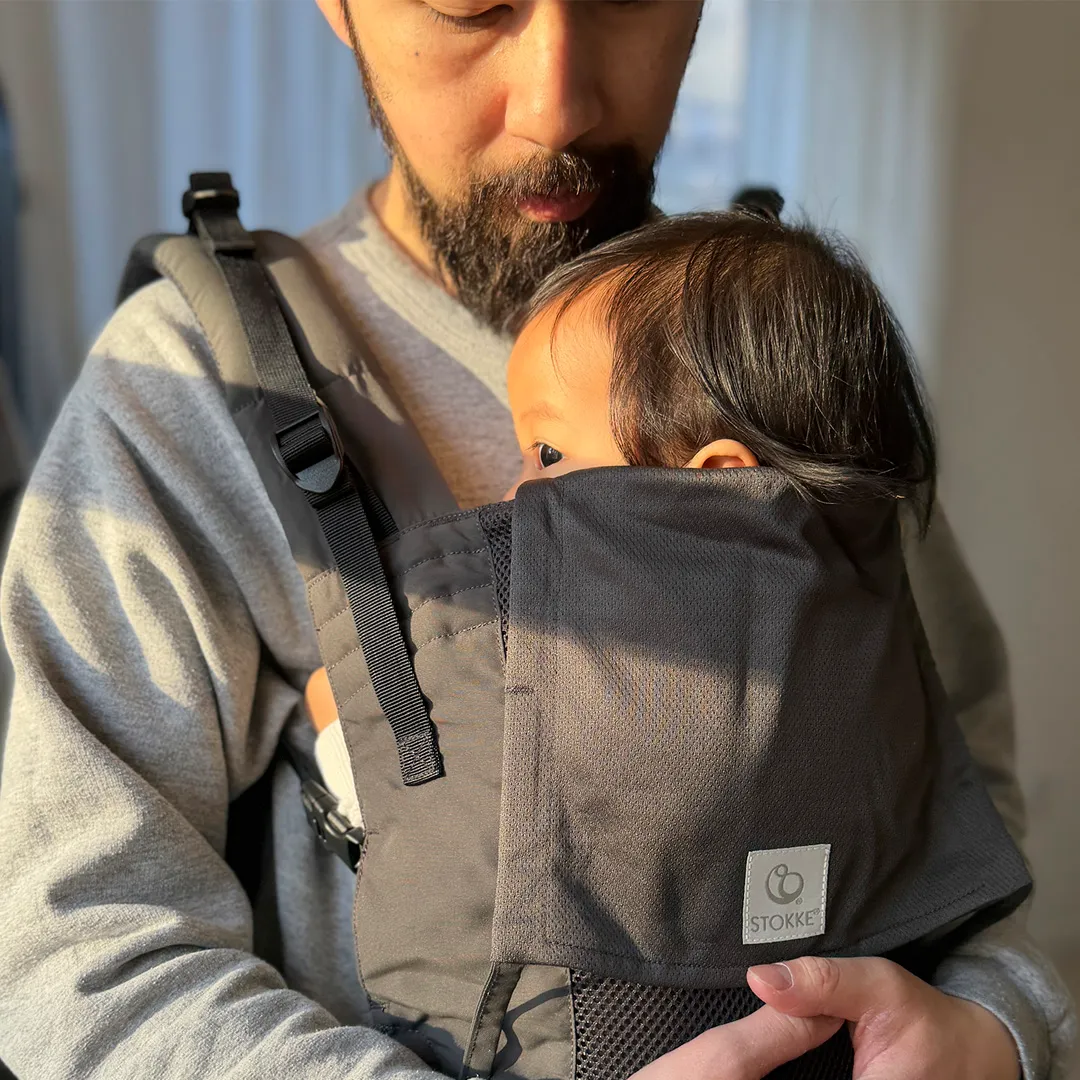
A lifestyle shot of a bearded man wearing a grey sweatshirt and a black Stokke Limas Flex baby carrier with a baby's face peeking out, in soft warm window light.

Baby carrier from birth

When can you start using a baby carrier?

There is no single date that suits every family. Whether you can use a baby carrier from birth depends on the carrier's stated minimum weight or age and on your baby.

  • Read the manual and check the age and weight range for your carrier.
  • Make sure your baby meets the minimum, and use the carrier exactly as instructed.
  • If your baby was born prematurely, or you have any concerns about hips or health, speak to your midwife, health visitor or a certified babywearing consultant first.

This guide is general information and not medical advice. Trust your instincts and ask for help whenever you are unsure.
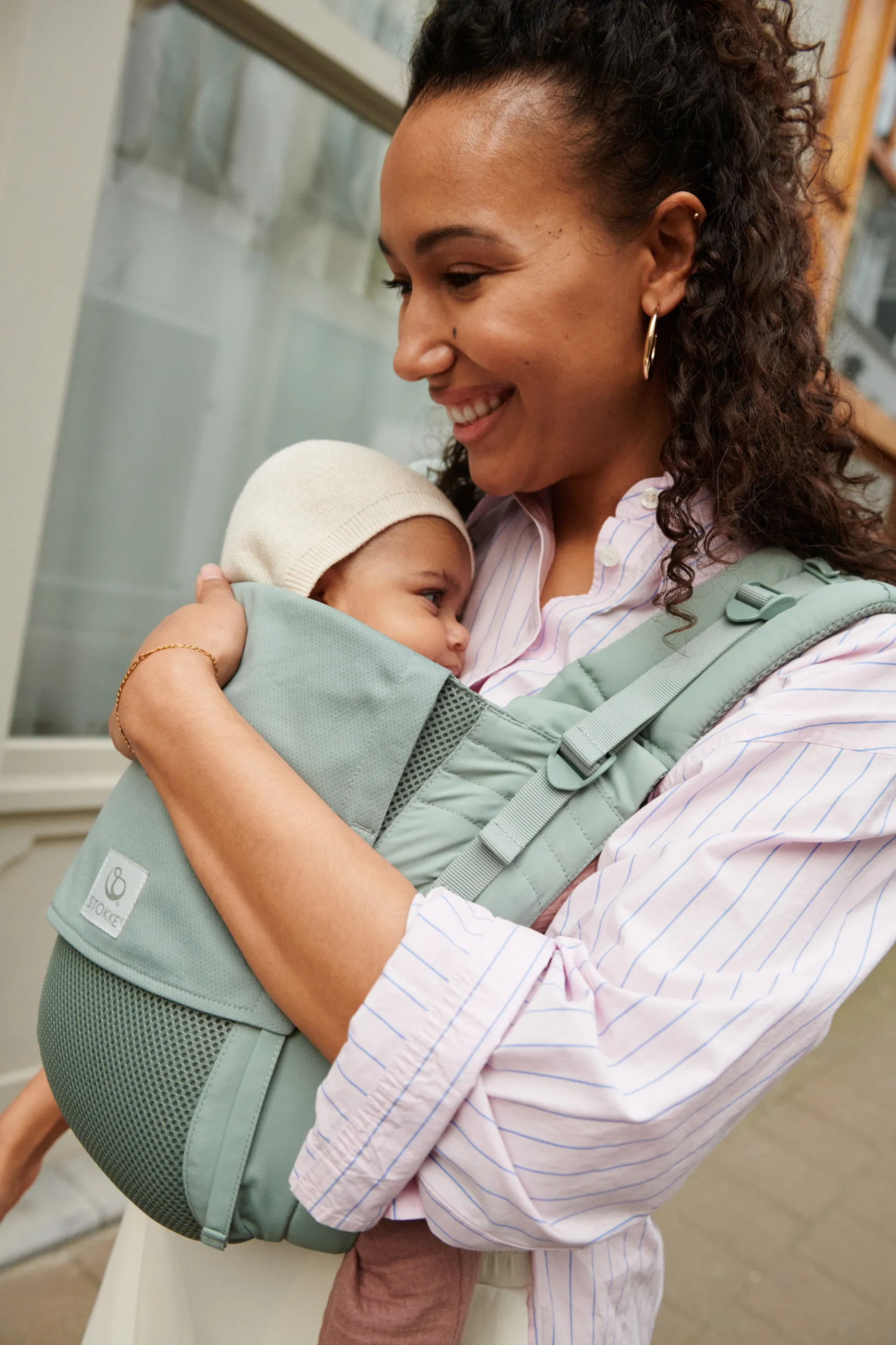
A lifestyle shot of a smiling woman carrying a baby in a Stokke Limas Mesh baby carrier in Glacier Green, outdoors near a building with soft natural light.

Stokke® Limas™

How Stokke Limas carriers work from birth

Stokke® Limas™ carriers are made from soft organic cotton and offer front, back and hip carrying. Each one suits a slightly different parent, so here is how they compare for the early months.

Limas Carrier is a half-buckle carrier made from soft wrap fabrics, designed for carrying from birth and adjustable as your baby grows. Limas Carrier Plus adds extra-wide shoulder straps for longer carries, and Limas Carrier Flex uses a full buckle system that goes on in seconds. A Mesh option is also available for warmer weather; check the product page for details.

At a glance

Limas carriers for the early months

Limas Carrier

Style

Half-buckle, soft wrap fabrics

Stated age and weight

From birth (3.2 kg) up to 15 kg

Limas Carrier Plus

Style

Half-buckle, extra-wide shoulder straps

Stated age and weight

From one month (4 kg) up to 18 kg

Limas Carrier Flex

Style

Full buckle, quick adjustment

Stated age and weight

From one month (4 kg) up to 20 kg

Want the full side-by-side? Read our Limas carriers comparison: wrap vs half-buckle. Always check the product page for the age and weight range before you buy.

Getting started

Your first weeks of carrying: practical tips

A little preparation makes the first outing much calmer. Heading out with a newborn? Our Baby Travel Essentials guide and compact stroller guides are handy for planning days when you want a break from carrying.

Practise at home first

Try the carrier indoors, ideally over a bed or sofa, before your first walk. Take your time with each strap.

Do a mirror check

A quick look in the mirror shows whether your baby is high, snug and visible, with their chin off their chest.

Take breaks

Newborns need frequent feeds and changes, and so do you. Take your baby out of the carrier whenever either of you needs it.

Dress for the temperature

A carrier adds warmth, so go lighter than you would in a pram and check your baby is neither too hot nor too cold.

Ask a partner to help

A second pair of eyes can help with adjusting straps and checking position, especially in the early days.
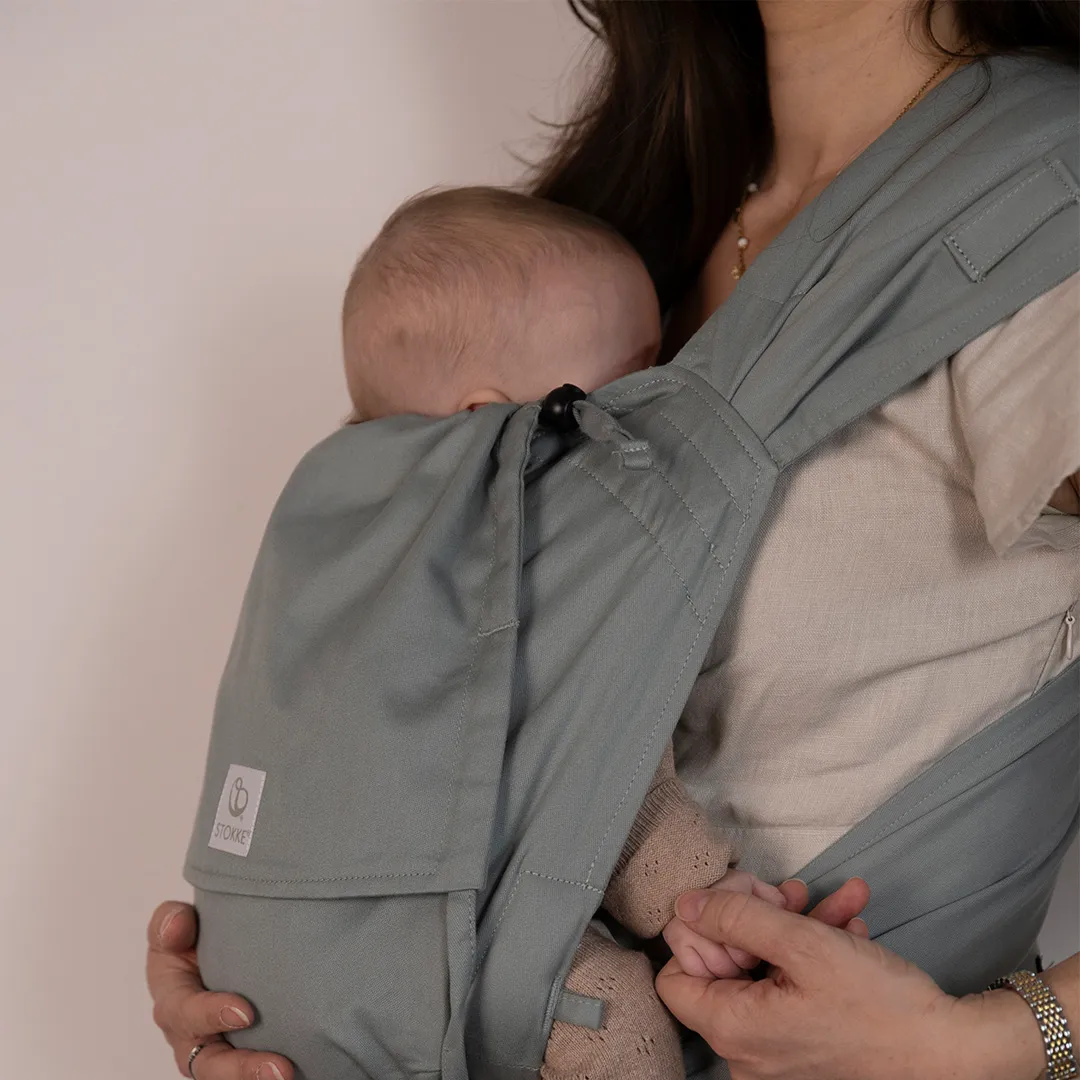
A lifestyle shot of a woman wearing a glacier green Stokke Limas baby carrier with a sleeping newborn tucked against her chest in soft, neutral indoor light.

Questions answered

Newborn baby carrier FAQs

Short, cautious answers to common questions from UK parents. If in doubt, ask your health visitor.

Can you use a baby carrier from birth?+
Many parents do, as long as the carrier is designed for newborns and your baby meets its stated minimum age or weight. Check the product page and manual, and ask a health professional if you have concerns.
What is the best baby carrier for a newborn?+
The best baby carrier for a newborn supports the head and neck, holds the legs in a seated position and adjusts to a small body. Check the stated age and weight range, and that it feels comfortable for you too.
How do I know my baby is positioned safely?+
Use the checklist: baby visible and close, airway clear, chin off the chest, back supported, and no loose fabric over the face. A quick mirror check helps, and so does a second pair of eyes.
Can a newborn sleep in a carrier?+
Babies often doze when carried. Keep checking that their airway is clear and their chin is off their chest, and move them to a flat, firm sleep surface when you can.
How long can a newborn stay in a carrier?+
There is no single answer. Take regular breaks for feeding and changing, and take your baby out if they seem uncomfortable, too warm or unsettled.
What is the difference between a wrap and a buckle carrier?+
A wrap is a length of fabric tied around you, which is very adjustable but takes practice. A buckle carrier uses clips for quicker, easier adjustment. Limas™ carriers blend soft wrap fabrics with buckles.